
National College of Ireland


Create a free account to unlock full content!
By registering, you agree to our Privacy Statement and Terms and Conditions.
| City | Country |
| Dublin | Ireland |
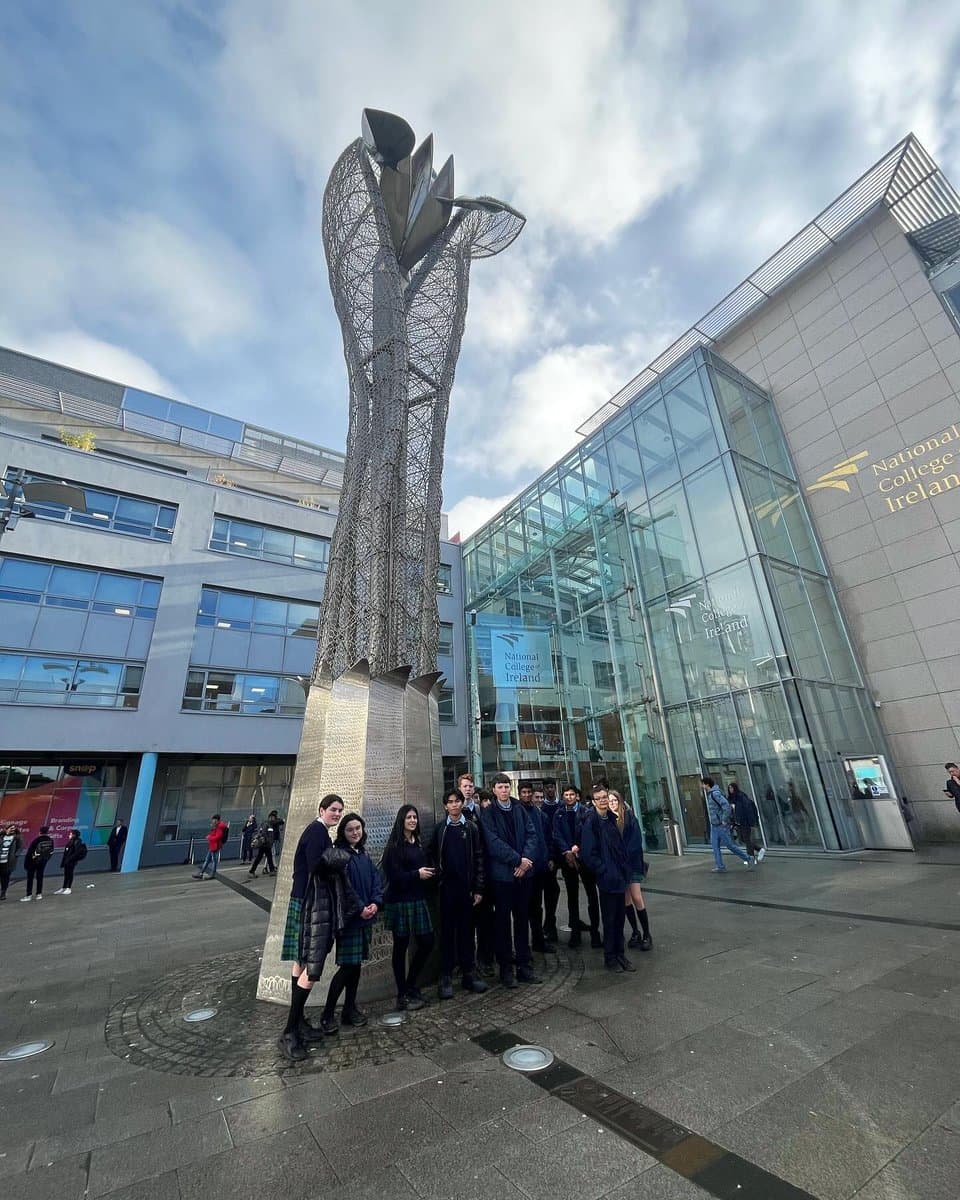
National College of Ireland (NCI), or Coláiste Náisiúnta na hÉireann (CNÉ) in Irish, is an independent, not-for-profit higher education institution based in Dublin's International Financial Services Centre (IFSC). Founded in 1951 by the Jesuit Order as the Catholic Workers College in Dublin's south city suburbs, NCI has grown through successive decades of transformation, arriving at its current home in modern campus buildings on Mayor Square and Spencer Dock in Dublin's North-East Inner City in 2002.
From 103 students enrolled in trade union programmes in its first year of operation, NCI now serves a student community of over 6,000. It is partially funded through a core grant from the Higher Education Authority (HEA) and is a recognised national leader in widening access to, and participation in, higher education as a lifelong pursuit.
Mission, vision and values
NCI's mission is to change lives through education. Its vision is to provide an inspiring educational experience that is innovative, responsive and enterprise focused. These commitments are carried across a set of six institutional values:
- Inclusive: actively breaking down barriers to third-level education, valuing diversity and ensuring every student can participate fully
- Community: fostering an interdependent learning community that values individuality, freedom of thought, and the ambition of every person
- Integrity: taking responsibility and accountability for actions, built on mutual respect
- Dynamic: remaining responsive to the evolving needs of students, employers and society, acting in an innovative and flexible manner
- Learner Centred: placing the learner at the heart of every decision, with all energies focused on their individual and lifelong learning needs
- Excellence: aspiring to professional excellence as an institution and cultivating it in learners through their academic experience
Strategic Plan 2022–2027
NCI's Strategic Plan 2022–2027 sets out six institutional priorities: Students, Staff, Teaching, Research, Access and Positioning. By 2027, NCI aims to be a distinctive and independent HEA-designated institution with delegated awarding authority, a student body of 8,500, and a world-class model of community engagement delivered from a state-of-the-art campus. A central strategic objective is to develop graduates with a lifelong love of learning who are valued contributors to the workforce and society, and who are committed to sustainability.
Academic provision
In the 2022/23 academic year, NCI offered 95 full-time and part-time, QQI-accredited programmes at Levels 6 to 9 on the National Framework of Qualifications (NFQ), across three academic areas:
- School of Business: 47 programmes, accounting for 50.3% of total enrolments
- School of Computing: 33 programmes (including the Cloud Competency Centre), accounting for 40.9% of enrolments, with NCI holding a 29% share of all national postgraduate ICT enrolments
- Centre for Education and Lifelong Learning (CELL): 15 programmes including psychology and education, accounting for 8.8% of enrolments
NCI also delivers Level 10 Research Degrees through a collaborative arrangement with Maynooth University, and offers a suite of microcredential programmes for individuals seeking to reskill or upskill in targeted areas. The college is the largest provider of Chartered Institute of Personnel and Development (CIPD) accredited programmes in Ireland in Human Resource Management.
Professional accreditations
Several NCI programmes carry accreditation from professional and statutory bodies, including:
- Association of Chartered Certified Accountants (ACCA)
- Chartered Institute of Management Accountants (CIMA)
- Chartered Institute of Personnel and Development (CIPD)
- Teaching Council of Ireland
- Psychological Society of Ireland (PSI)
- Qualifications Advisory Board (QAB)
Quality assurance and accreditation
NCI's qualifications are awarded by Quality and Qualifications Ireland (QQI), and its quality processes are aligned with QQI policy and guidelines, which are in turn aligned with the European Standards and Guidelines for Quality in Higher Education. The Quality and Institutional Effectiveness (QIE) office drives continuous improvement across all programmes, services and strategies through a rigorous cycle of programme lifecycle management, annual programme monitoring, external stakeholder engagement and national student surveys.
In 2022/23, 76% of students rated their overall experience at NCI as good or excellent, and 80% said they would choose NCI again if starting their studies. NCI's completion rate in 2022/23 was 85% for full-time programmes and 87% for part-time programmes, both of which represent significant improvements over the preceding five-year period.
Institutional recognition and awards
- Five QS Stars overall rating
- Athena Swan Bronze Award for gender equality in higher education (received 2020, renewal submitted 2024)
- Autism Friendly Higher Education Institution, designated by AsIAm in 2021, only the second HEI in Ireland to receive this designation
- Age-Friendly University (AFU) Global Network member
- Investors in Diversity Bronze Award from the Irish Centre for Diversity (2023)
- IBEC KeepWell Mark for staff wellbeing programmes (2023)
- IBEC Top 100 Companies Leading in Wellbeing
- Member of the Kircher Network
- NCI's Career Development and Employability Service has won the AHECS Excellence in Employability award in 2013, 2014, 2016, 2018 and 2020
Student profile and outcomes
NCI's student community is diverse and internationally represented. In 2022/23, 6,016 students from 121 nationalities were enrolled. International students made up 28.2% of the student body, with strong representation from South-East Asia, particularly in postgraduate computing programmes. NCI's part-time enrolment rate of 41.8% is significantly above the HEA sector average of 22.5%, reflecting the college's strong commitment to accommodating working students and mature learners. In 2022/23, 55% of NCI students were aged 24 or over, compared to 5.4% across the HEA sector as a whole.
Graduate outcomes are strong: 85.8% of School of Computing graduates were employed within nine months of graduation, and 75.2% of School of Business graduates were in employment, aligned closely with national HEA graduate outcomes data. 100% of students who completed a work placement at NCI agreed it gave them a competitive edge in the graduate jobs market.
Access and lifelong learning
NCI is a recognised national leader in widening access to higher education. Its HEAR and DARE acceptance rates of 8.9% and 11.9% respectively are significantly above the HEA sector norms of 4.2% and 6.1%, reflecting an institutional commitment to supporting students from socially disadvantaged backgrounds and those whose disabilities affected their second-level education.
NCI offers a Recognition of Prior Experiential Learning (RPEL) scheme, accelerated degree pathways, flexible part-time and blended learning modes, and government-funded upskilling programmes including Springboard, the Human Capital Initiative and Skillnet. It also holds agreements with nine Further Education colleges for advanced entry across six undergraduate programmes. Apprenticeship programmes in International Financial Services and Recruitment Practice were among the first new consortium-led apprenticeships validated by QQI, in 2016/17.
Research
NCI's Research Strategy 2023–2027 commits the college to a step change in research and innovation capability, structured around five goals: driving research, engaging with partners, attracting funding, creating a dedicated research office, and communicating and disseminating outputs. Between 2018 and 2024, NCI participated in international research projects worth €64 million in total, of which NCI received €5.9 million. Research clusters under the strategy span Management and Enterprise, HR Management, Computer Systems, Intelligent Systems, Technology Enhanced Learning, Prevention and Early Intervention in Childhood Education, Social Justice and Diversity, and Psychology and Health Economics.
Across the 2018–2022 period, NCI recorded 292 publications from 160 authors, 4,820 citations, a field-weighted citation impact of 1.71, and an H-Index of 24. NCI is part of the Dublin Regional Innovation Consortium (DRIC), a technology transfer consortium that has facilitated licensing agreements with companies including Sony, Microsoft and Bausch and Lomb.
Early Learning Initiative
The Early Learning Initiative (ELI), established in 2006, is NCI's internationally recognised community engagement programme operating in Dublin's North-East Inner City. ELI works with children, families and early childhood services in areas of greatest educational need, delivering programmes in children's language, literacy and numeracy, parental support, educational and career guidance, and quality CPD for early childhood practitioners. In 2022/23, ELI engaged 16,433 participants across Ireland, completed 13,975 home visits, supported 7,885 parents and engaged 165 volunteers with the support of 24 corporate partners. ELI is recognised as an international leader in early education interventions and community action research.
Sustainability
Sustainability is embedded at the heart of NCI's 2022–2027 Strategic Plan, with a Sustainability Strategy 2024–2029 in development. NCI's research impact surpasses Ireland and world averages on UN SDG Goal 4 (Quality Education), SDG Goal 5 (Gender Equality), SDG Goal 8 (Decent Work and Economic Growth) and SDG Goal 16 (Peace, Justice and Strong Institutions). Campus operations include 100% renewable electricity sourced from Lacken Wind Farm, biodegradable catering packaging, comprehensive recycling and composting infrastructure, a resident bee colony, and a tree-planting programme through Tree-Nation gifting each graduate a tree at graduation.
Student support services
- Academic Skills Centre: targeted support for academic writing, research and study skills
- Counselling Centre: professional mental health and wellbeing services
- Language Centre: English language and additional language support
- Learning Support Centre: specialist support for students with learning differences or disabilities
- Personal Tutoring: assigned academic guidance for each student throughout their studies
- Career Development and Employability Service: career planning, CV support, mock interviews, networking and lifelong access to a weekly jobs newsletter and careers resources for alumni
- Students' Union (NCISU): an active union with a formal Partnership Agreement with NCI since 2022, including shared commitments to equality, diversity and inclusion and the UN Sustainable Development Goals
- Sensory Room: a dedicated quiet space for autistic students and staff, opened in 2021
- Parenting Suite: a nursing facility available to all staff and students since 2020
- Scholarships: including the Master's Edge Scholarship, offering a 25% discount on postgraduate course fees
Campuses and facilities
NCI occupies two modern campus buildings in Dublin's IFSC: Mayor Square Campus and Spencer Dock Campus, both centrally located in the heart of Dublin's North-East Inner City. Facilities include specialist computing and science laboratories, libraries with extensive digital and physical resources, digital learning platforms, and a Business Incubation Centre. The campus is easily accessible by public transport.
Why NCI
- An HEA-funded, independent, not-for-profit institution with over 70 years of operation and a clear mission: to change lives through education
- 95 QQI-accredited programmes across Business, Computing, Education and Psychology at Levels 6–9
- A five QS Stars overall rating, Athena Swan Bronze Award, and Autism Friendly HEI accreditation
- Ireland's largest provider of CIPD-accredited Human Resource Management programmes
- A 29% national share of all postgraduate ICT enrolments, making NCI one of Ireland's most significant computing education providers
- A nationally leading access model, with HEAR and DARE acceptance rates more than double the HEA sector average
- Strong graduate employment outcomes and an award-winning Career Development and Employability Service
- An internationally recognised Early Learning Initiative addressing educational disadvantage in Dublin's inner city
- A modern, centrally located Dublin campus with a diverse student community of 121 nationalities