

Osnabrück University of Applied Sciences
Create a free account to unlock full content!
By registering, you agree to our Privacy Statement and Terms and Conditions.
| City | Country |
| Osnabrück | Germany |
Osnabrück University of Applied Sciences (Hochschule Osnabrück) is the largest and highest-performing university of applied sciences in Lower Saxony, Germany, and one of the strongest research universities of applied sciences in the country. Founded in 1971, the university has grown steadily from a regional institution into a nationally respected place of applied learning and research, operating across four locations in Osnabrück and Lingen with 13,071 students enrolled in the 2024/2025 winter semester.
Since 1 January 2003, the university has operated as an incorporated foundation under public law (Stiftung Fachhochschule Osnabrück), a legal status that provides significant institutional autonomy and reflects a strong signal of trust from the State of Lower Saxony in the university's performance. In 2010, it was formally renamed Hochschule Osnabrück.
Faculties and academic structure
Teaching and research at Osnabrück University of Applied Sciences are organized across four faculties and one specialist institute, each based at a distinct campus location:
- Faculty of Business Management and Social Sciences (WiSo), Caprivi Campus, Osnabrück: 5,517 students in winter semester 2024/25
- Faculty of Engineering and Computer Science (IuI), Westerberg Campus, Osnabrück: 2,549 students
- Faculty of Agricultural Sciences and Landscape Architecture (AuL), Haste Campus, Osnabrück: 2,443 students
- Faculty of Management, Culture and Technology (MKT), Campus Lingen: 2,147 students
- Institute of Music (IfM), Westerberg Campus: 415 students
Across these faculties, the university offers around 110 degree programmes at Bachelor's, Master's and continuing education levels. The university has been a pioneer in establishing new degree programmes, earning a strong reputation as an innovative and progressive institution of higher education.
Lower Saxony's strongest research university of applied sciences
Osnabrück University of Applied Sciences describes itself as the strongest research university of applied sciences in Lower Saxony, with deep connections to business, society and the scientific community. Research activity is structured around three core fields:
- Agriculture and Food Systems, Landscape and Urban Development
- Health, Society and Economy
- Sustainable Technologies and Processes
The range of topics within these fields is broad, spanning drive and mobility solutions, health and supply innovations, nutrition and agricultural technologies, material sciences, landscape and urban development, and computer science and artificial intelligence.
In addition, the university funds two internally supported research priorities (BFSP) of a particularly innovative character: EN ROUTE, which develops concepts and strategies for sustainable travelling in the university context, and SPINE, which explores the potential applications and effects of artificial intelligence.
Cooperative doctorates
As a university of applied sciences, Osnabrück does not independently confer doctoral degrees, but actively facilitates cooperative doctorates in collaboration with partner universities. As of 2024, 133 cooperative doctorates were ongoing across the four faculties, distributed as follows:
- Faculty of Agricultural Sciences and Landscape Architecture: 51
- Faculty of Business Management and Social Sciences: 42
- Faculty of Engineering and Computer Science: 28
- Faculty of Management, Culture and Technology: 12
Membership in UAS7 and European University Association
Osnabrück University of Applied Sciences is a member of the UAS7 alliance, a consortium of seven leading German universities of applied sciences that cooperate to advance their international orientation, with offices in New York and São Paulo. Thanks to the strength of its research, the university is also a member of the European University Association (EUA), placing it among a select group of universities of applied sciences recognized at the European level for research quality.
International network
The university maintains a global network of more than 300 partner universities across every continent, built up over decades and spanning all five faculties. International students enrolled at the university in 2024 totalled 906, with the three largest national groups being students from the Syrian Arab Republic (103), Indonesia (48) and Turkey (34). In 2024, a further 196 international participants attended the university's short-term international programmes, including summer and winter language courses, the International Summer University, the International Study Program and Winter Schools.
In 2013, the university established the Hochschulzentrum China (HZC), a dedicated centre for cooperation with Chinese academic partners.
Campuses and infrastructure
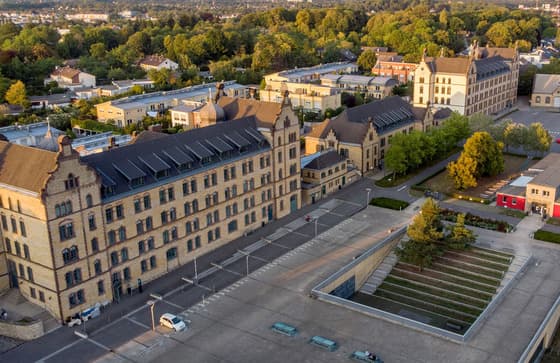
The university operates four campus locations, three in Osnabrück and one in Lingen:
- Caprivi Campus, Osnabrück: home to the Faculty of Business Management and Social Sciences, featuring the Caprivi-Lounge student social hub
- Westerberg Campus, Osnabrück: the main campus location at Albrechtstraße 30, home to Engineering and Computer Science and the Institute of Music, with a new library, canteen and lecture facilities completed in recent years
- Haste Campus, Osnabrück (Am Krümpel 31): home to Agricultural Sciences and Landscape Architecture, including the Teaching and Research Center Food Science housed in the heritage-listed "Schmied im Hone" country restaurant
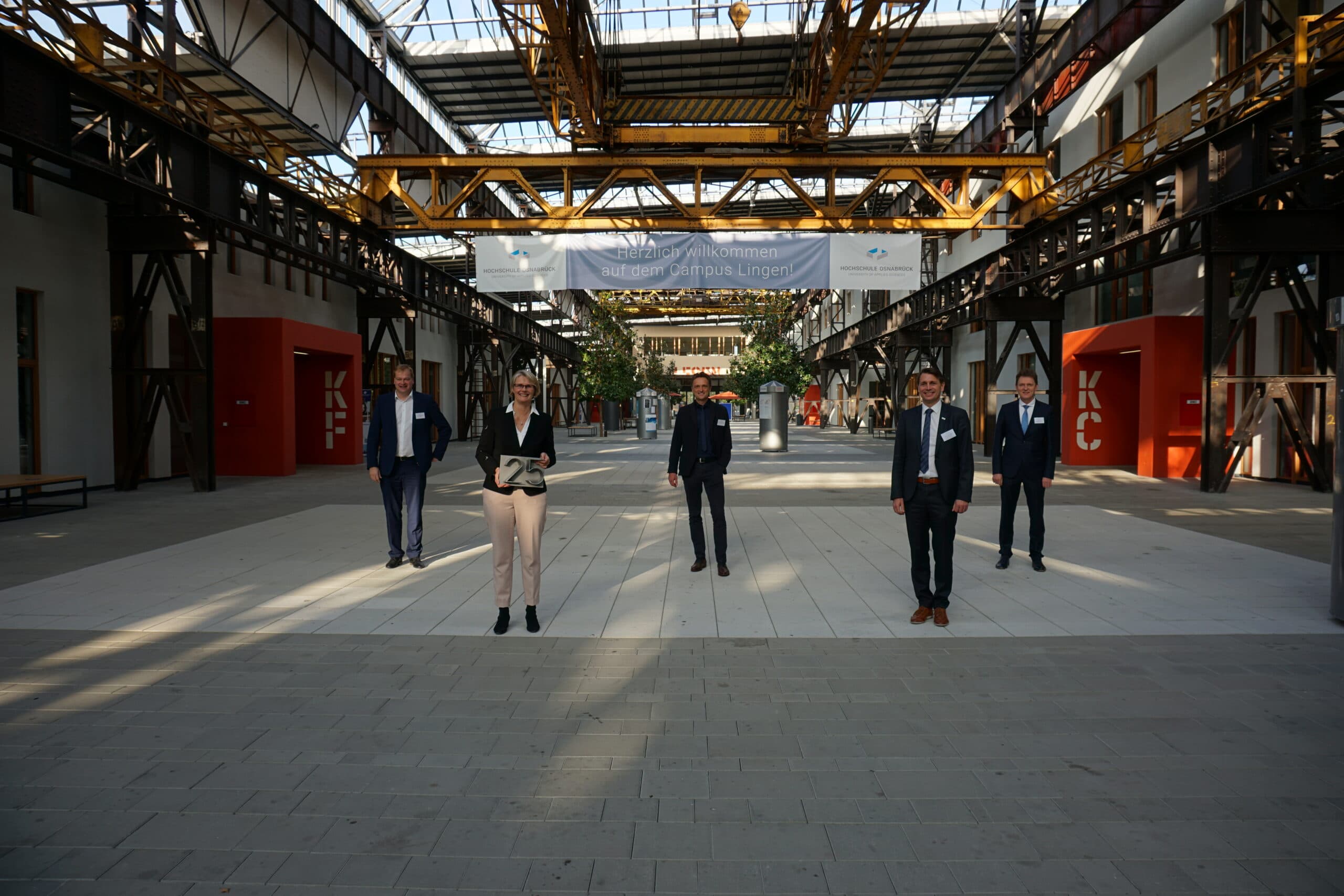
- Lingen Campus (Kaiserstraße 10c): home to the Faculty of Management, Culture and Technology, integrated into the former locomotive repair plant in a conversion that reflects the university's commitment to growing with its region
The university has invested continuously in modern infrastructure, including new laboratories for food science, renovated canteens, a new lecture hall and an expanded library at Westerberg, all reflecting its aim to create conditions that genuinely support the work of students, researchers and faculty.
As an employer
Osnabrück University of Applied Sciences plays an important regional role as an employer. As of late 2024, the total workforce stood at 1,413 employees, comprising 724 women and 689 men, including more than 320 professors. The university actively supports work-life balance and invests in development opportunities for all staff.
Sustainability and social commitment
The university takes its social responsibility seriously and is actively committed to climate protection. Through various measures implemented from 2008 to 2018, the university reduced its CO2 emissions per person by almost 70 percent, a significant achievement for an institution of its size and scope. More broadly, the university sees its role as not only providing technical and professional skills, but shaping open-minded, socially aware individuals who are committed to contributing to the common good.
Student life
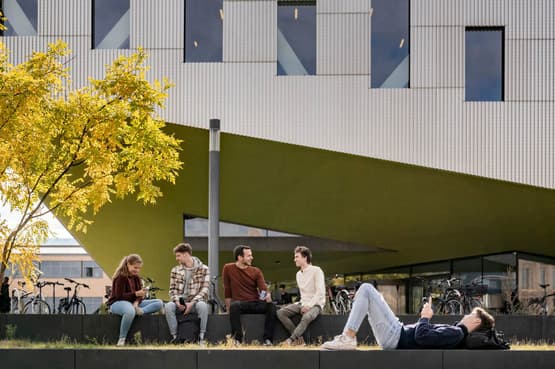
Student life at Osnabrück University of Applied Sciences reflects the personal, close-knit character the university has deliberately maintained as it has grown. Students can get involved in the student body (AStA), a wide range of student groups and initiatives, sports offerings, and community engagement activities across both Osnabrück and Lingen. The annual CHANCE career fair connects students and graduates directly with companies and employers. Both cities offer an affordable, lively and student-friendly environment within easy reach of all campus locations.
Osnabrück University of Applied Sciences in numbers
- Founded: 1971
- Legal form: incorporated foundation under public law (since 2003)
- Students (winter semester 2024/25): 13,071
- Employees (late 2024): 1,413
- Professors: more than 320
- Degree programmes: approximately 110
- Campuses: 4 (Caprivi, Westerberg and Haste in Osnabrück; one in Lingen)
- Cooperative doctorates ongoing: 133
- International students: 906
- Partner universities worldwide: more than 300
Why Osnabrück University of Applied Sciences
- The largest and highest-performing university of applied sciences in Lower Saxony, and the strongest in research, with a history dating back to 1971
- Around 110 degree programmes across four faculties and the Institute of Music, spanning agriculture, engineering, computer science, business, social sciences, management, culture, technology and music
- Member of the UAS7 alliance and the European University Association, placing it among Germany's most internationally oriented and research-active universities of applied sciences
- A global network of more than 300 partner universities and multiple short-term international programmes for incoming and outgoing students
- A strong applied research profile focused on transformation-relevant topics including AI, food systems, sustainable technologies and health
- Four campuses in Osnabrück and Lingen, each deeply embedded in their local community and continuously developed with modern infrastructure
- An employer of 1,413 people and a significant anchor institution for the Osnabrück and Lingen region